

Roof photos you take should clearly document damage, date stamps, and exact locations, include wide and close shots, and capture surrounding context so you can support your insurance claim with reliable evidence.
Prioritizing Safety and Proper Equipment
Stay off unstable roofs; work from ladders or drones when possible and have a spotter. Use fall protection, non-slip shoes, and check anchor points before climbing so you can document damage without creating new hazards for your insurance claim.
Essential Tools for High-Quality Damage Documentation
Carry a high-resolution camera or smartphone with grid and timestamp, a measuring tape, moisture meter, and a sturdy ladder; take both close-ups and wide shots so your insurer sees scale and context for each damaged area.
Weather Awareness and Safety Gear for North Texas Roofs
Watch local forecasts and radar before any inspection; avoid storms, hail, high winds, or wet shingles and postpone rooftop work if conditions increase fall or slip risk.
When you head out in North Texas, plan for rapid weather changes: spring hail, summer thunderstorms, strong gusts, and intense heat. You should use a full-body harness with rated anchors, a hard hat, non-slip boots, and eye protection. If winds top about 20 mph, lightning appears, or the roof is soaked, stay off and use a drone or ground telephoto; keep a partner monitoring conditions and ready to assist.

Capturing Wide-Angle Overview Shots
Capture wide-angle overview shots from multiple positions so you show the entire roof and surrounding context; keep the horizon level, use high resolution, and include nearby reference points for scale.
Documenting All Four Elevations of the Property
Survey each elevation-front, rear, left, right-and shoot from consistent height and angles so you document damage distribution, roofline relationships, and any differences visible to the adjuster.
Identifying Collateral Damage to Downspouts and Fencing
Check downspouts, gutters, and fencing for dents, separations, or debris; photograph close-ups and wider shots so you tie collateral damage to roof impact for the claim.
Include a scale reference, compass direction, and timestamps so you prove spatial relationships; photograph attachment points, displaced fasteners, nearby debris, and any interior water stains linked to the exterior damage.
Macro Photography for Specific Material Failure
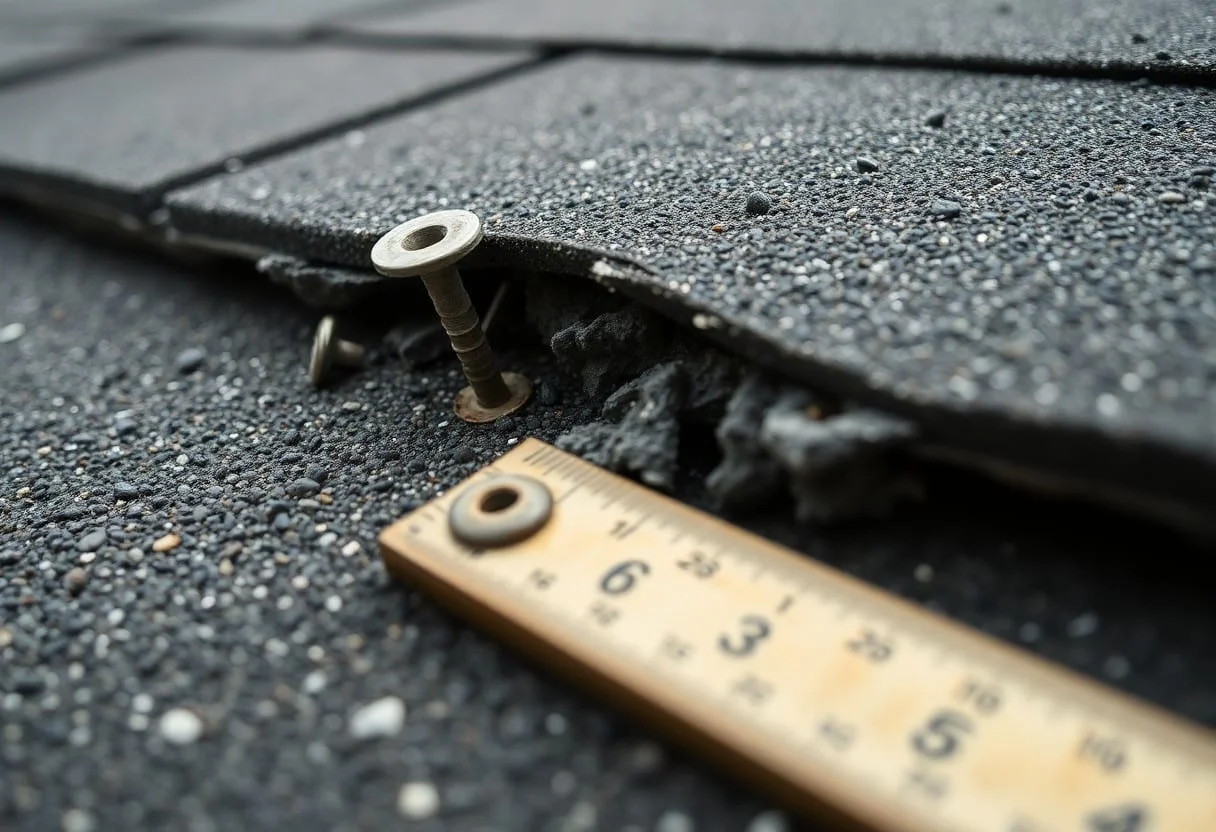
Close-up shots reveal subtle tear edges, granule loss, and surface pitting that broader images miss; you should use a macro lens or the macro setting on your phone, steady support, and consistent lighting to capture evidence inspectors will accept.
Highlighting Hail Impact and Granule Displacement
Focus on individual dents and missing granules by shooting perpendicular to the surface for true scale; include a coin or ruler for reference and take wide and close frames so you can show context and detail to adjusters.
Documenting Wind-Lifted Shingles and Thermal Cracking
Photograph lifted tabs from several angles and include overlap gaps, fastener exposure, and edge curls; use oblique lighting to emphasize cracks and tag each image with location and time for claim records.
Capture multiple shots showing both the roof field and each lifted shingle, photograph exposed nail heads and torn sealant, and label images with location, pitch, and wind direction so you can link photos directly to inspection notes and policy documentation.
Establishing Scale and Precise Location
You should photograph a wide roof shot with GPS metadata and label the affected quadrant; include distance estimates and compass bearing so adjusters can precisely locate the damage on inspection.
Using Reference Tools to Quantify Damage Size
Measure with a tape or ruler you hold next to the damage; include a coin or business card for scale and photograph from a perpendicular angle to avoid distortion.
Contextualizing Close-ups Within the Larger Roof Plane
Frame close-ups alongside a wider shot showing the roof plane and nearby landmarks so you clarify relation and roof slope for adjusters.
Include angled wide-coverage shots from both the gutter line and the ridge so you and adjusters see exactly where each close-up sits; annotate photos with arrows or labels, and note roof pitch plus nearby vents, chimneys, or trees that affect damage context.
Documenting Interior and Attic Evidence
Inspect attic and interior damage thoroughly, photographing stains, mold, insulation displacement, and structural cracks from multiple angles, with timestamps and a brief note of location to strengthen your claim.
Mapping Water Intrusion Points and Ceiling Stains
Trace water paths by photographing ceiling stains, peeling paint, and drip locations, include a ruler or coins for scale, capture close-ups and wide shots, and note when you first observed each spot.
Correlating Attic Structural Issues with Exterior Impact
Compare attic rafter damage, loose sheathing, or displaced insulation with exterior impact points, photographing matching angles and labeling photos so you show causality to your insurer.
Document exterior damage-missing shingles, punctures, and dented flashing-alongside attic images that show matching breaks, water trails, or insulation gaps; include distance measurements, scale objects, roof slope orientation, and contextual shots from the ground so you make a clear link between outside impact and interior structural issues for the claim adjuster.
Organizing Digital Evidence for Claim Submission
You organize evidence into dated, labeled folders by location and damage type, include photos, videos, and notes, and keep backup copies on both cloud and local drives so claims are easy to retrieve and submit.
Maintaining Metadata and Date-Stamped Integrity
Preserve original EXIF metadata by avoiding in-camera or app edits; if you must edit, save untouched originals and document any changes so you can prove date and authenticity.
Structuring a Cohesive Narrative for the Adjuster
Craft a clear photo sequence that shows overview, context, and close-ups with short captions and timestamps so you give the adjuster a simple chronological story of cause and damage.
Outline a logical file order for your submission: cover shots, mid-range context, close-ups, and measurements, each labeled with date and location. Include a brief written summary with dates, the sequence of events, and any temporary repairs you performed, plus a map or photo index so the adjuster can cross-reference. Keep originals intact, export a consolidated PDF packet, and archive copies across devices for your records.

To wrap up
Conclusively you should photograph roof damage with wide and close-up shots, include date-stamped photos and contextual angles, capture measurements and video when safe, note locations, and organize files so your insurance claim in Plano and beyond proceeds quickly.
FAQ
Q: What specific photos should I take to support a roof damage insurance claim in Plano and other areas?
A: Start with clear wide-angle shots that show the entire roof from at least two opposite sides so the adjuster can assess overall damage and slope. Take close-up images of damaged shingles, exposed underlayment, lifted flashing, broken vents, cracked tiles, and gutter damage. Photograph interior water stains on ceilings and walls, attic damage, and any soaked insulation. Capture the ground-level view that includes the house address or nearby landmarks for location confirmation. Include photos of nearby trees, downed branches, or other external causes. Add at least one photo showing a scale reference such as a tape measure, ruler, or common object to indicate size of holes or torn shingles.
Q: How can I safely photograph roof damage while following best practices?
A: Avoid stepping onto the roof unless you are trained and equipped with fall protection. Use a tall ladder placed on stable ground and have a spotter hold the ladder. Use a drone or a camera with a telephoto lens to capture high or steep areas from a safe distance. Wear slip-resistant shoes, gloves, and eye protection when on ladders or the roof edge. Do not attempt photography near downed power lines; call the utility company and your insurer instead. If weather or structural instability makes access unsafe, document conditions from the ground and note why rooftop access was not possible.
Q: What metadata and context should accompany photos for insurance claims in Plano and beyond?
A: Ensure each photo has date and time stamps enabled in your camera or phone metadata. Record GPS coordinates when possible and include the full property address in a separate document or cover photo. Make notes about the weather and the event that caused the damage (hail, windstorm, fallen tree, etc.) and reference local storm reports if available. Collect before-and-after photos when possible, and keep a short written timeline of when the damage occurred and when each photo was taken. Provide contact information and the policy number with the photo set.
Q: What camera settings and techniques produce the most useful evidence for an adjuster?
A: Use the highest resolution available on your device and keep original files unedited. Use natural daylight or even lighting to avoid shadows that hide damage; take photos from multiple angles to show depth. Use close-ups at 1-3 feet for texture and fasteners, and telephoto or drone shots for overall context. Capture overlapping images so the adjuster can follow a clear sequence. If your camera supports RAW or HDR, use those modes to preserve detail in highlights and shadows. Add a short video walkthrough pointing to damage while stating your name, address, and date on the recording.
Q: How should I organize and submit roof damage photos to my insurance company in Plano and elsewhere?
A: Create a labeled folder structure on your device or cloud storage with the property address and date. Name files with a short prefix and sequence number (example: 123MainSt_01_exteriorwide.jpg). Include a cover sheet or spreadsheet listing each file name, a brief caption, date/time, and the photo location on the roof. Keep originals and provide copies for submission; attach originals to claim portal uploads or email and keep backups on a separate drive. If your insurer accepts video, submit the walkthrough video along with stills. Keep a record of all submissions, confirmation numbers, and any correspondence with the adjuster.